Combine two addends (parts) into a sum (total) that is 10 or less. Use five frames, ten frames, and number bonds, to break numbers into easier parts to visuallize, in order to use mental math to figure out how many, without counting.
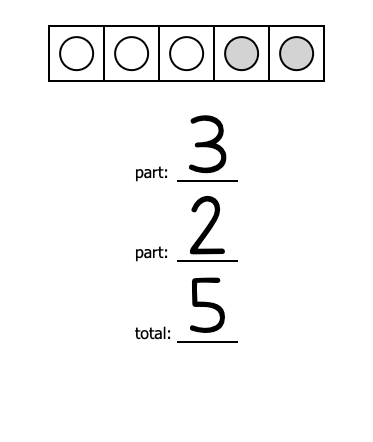
Use five frames to visually break a set of up to 5 counters into parts. Start by outlining each part. Count or subitize to know how many are in each group, and how many altogether. Recognize and read the words "part" and "total." Make sense of both by connecting the objects in the five frame with each digit being traced. Prerequisites: K-27
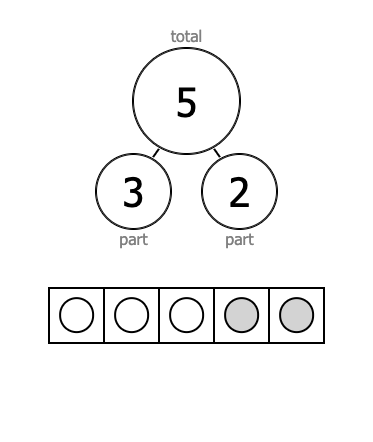
Use number bonds and five frames to find the total. Given 2 parts in a number bond, visualize them mentally on a five frame. How many in all? Encourage metacognition by first visualizing the total mentally. Check for correctness – think about our thinking – by drawing or using real counters. Work toward fluency within 5. Prerequisites: K-29 ○ K-12
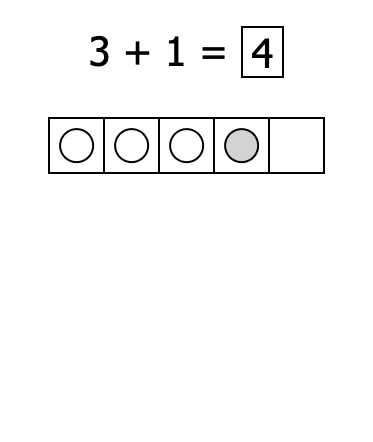
Given an addition equation with 2 addends, find the sum. Use five frames to help students visualize the parts and find the total, if possible, without counting. What's 3+1? Imagine 3 counters plus 1 more. Since one frame is still empty, the total is 4. Check the answer by drawing or using counters. Prerequisites: K-32